
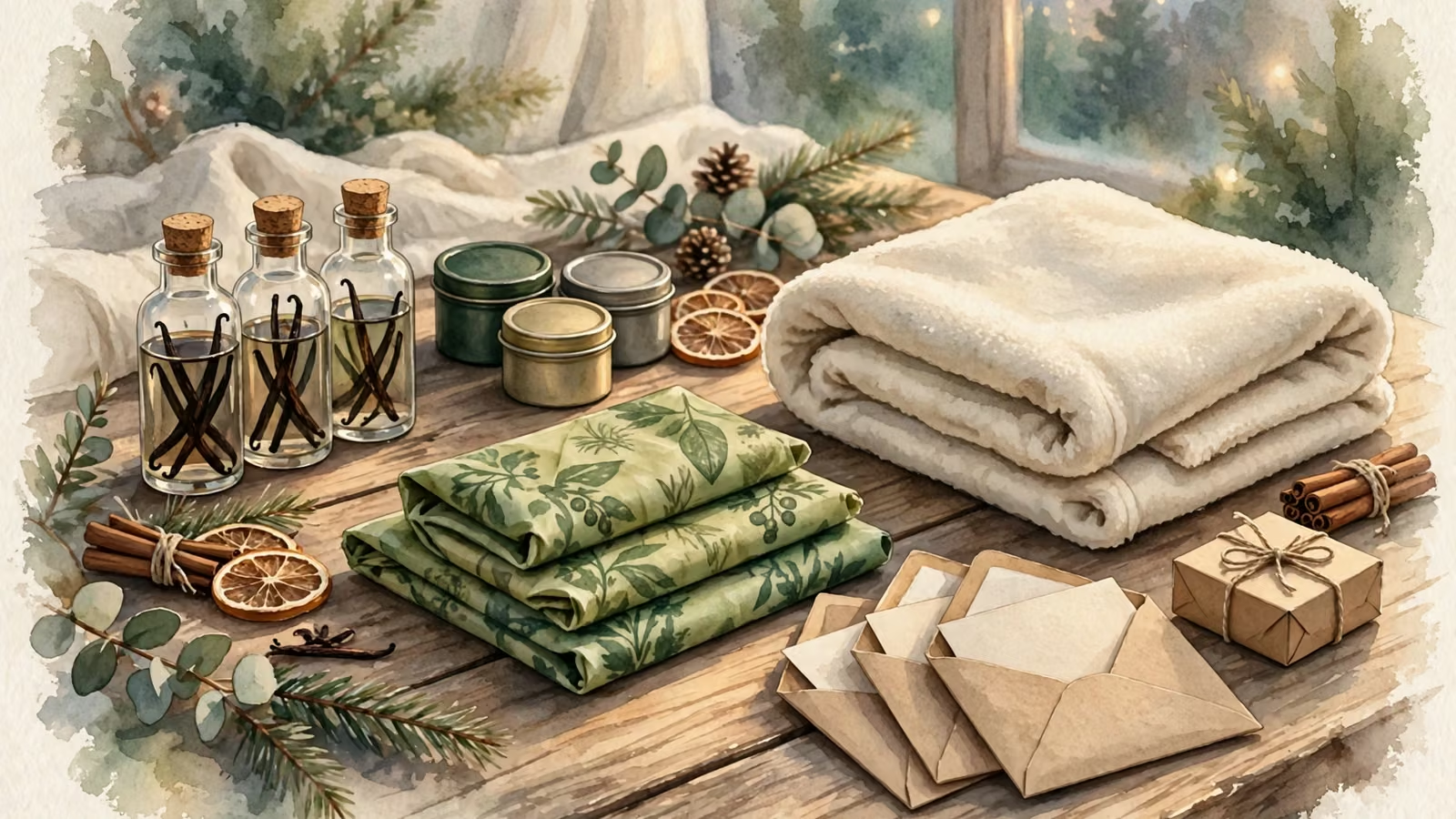
The useful DIY gifts are the ones that fit into a person’s ordinary week: a spice blend that goes on Tuesday’s chicken, a throw that lives on the sofa, wraps that replace the plastic box in the fridge. Every DIY gift in this guide is a simple DIY project: it takes one evening to make or about 15 minutes to assemble, uses a short list of materials, and costs a few dollars’ worth of supplies rather than a trip to the craft store. Each one is an easy project with no skill barrier. There are no knitting projects, no crochet, no embroidery, no ornament-making, no advent calendar to assemble, and no jar mixes that duplicate a cookie recipe. If you are hunting for a Christmas gift idea that will not end up in a drawer, start with what the person already does every week. If you want the wider handmade list, our guide to handmade Christmas gifts covers the craft side. This one stays practical, and it ends with simple ways to present a plain gift card so it still feels personal.
December gets crowded fast. Gifts you can finish in one sitting protect the rest of the season, because nothing sits half-done on the table reminding you about it. A homemade Christmas does not have to mean a month of projects; it can mean two finished things and a calm kitchen table. Our pillar guide to dealing with stress and anxiety covers the bigger picture if the season is already feeling like a lot.
What makes a DIY gift useful
Use these four checks on any gift idea before you commit an evening to it. What makes a great gift is not the hours in it; it is whether the person reaches for it in an ordinary week. A handmade gift earns its keep the same way a bought one does: by being used.
- It gets used weekly. Food, laundry, kitchen and sleep items earn their place because the person reaches for them without thinking about it.
- It wears out or gets used up. A gift that is finished in a few months asks for no storage and no display space.
- It fits the person’s actual routine. A spice blend suits someone who cooks. It does nothing for someone who orders in. Match the gift to a habit they already have.
- You can finish it in one sitting. One evening, start to wrapped. If a gift needs a second session, pick a smaller one.
The DIY gift ideas at a glance
| Gift | Main materials | Time | Skill level | Cost band |
|---|---|---|---|---|
| Vanilla extract | Vanilla beans, vodka or bourbon, small glass bottle | 15 minutes to assemble, then it sits | None | A few dollars per bottle once beans are bought in a small pack |
| Spice blend trio | Pantry spices, three small tins or jars | 20 minutes | None | Mostly pantry; a few dollars if one spice is missing |
| Beeswax food wraps | Cotton fabric, beeswax pellets, parchment paper | About 45 minutes for a set of three | Beginner | A few dollars’ worth of wax and fabric per set |
| Felted wool dryer balls | Wool roving or 100% wool yarn, old tights, string | 20 minutes hands-on, plus a wash and dry cycle | Beginner | A few dollars’ worth of wool per set of three |
| No-sew fleece throw | Two lengths of fleece, scissors | About an hour | Beginner | Fabric is the main cost; watch for remnant-bin pieces |
| T-shirt tote bag | A sturdy old t-shirt, scissors | 15 minutes | None | Free if the shirt comes from your own drawer |
| Solid hand balm bars | Beeswax, coconut oil or shea butter, small tins or a silicone mold | 30 minutes | Beginner | A few dollars’ worth of wax and butter per batch |
| Lavender eye mask | Cotton fabric, flaxseed or rice, dried lavender, needle and thread | About 45 minutes | Basic sewing | A few dollars’ worth of filling and fabric scraps |
| Family recipe binder | Binder or card box, recipe cards, printed photos | About an hour | None | Binder and printing are the only costs |
| Movie-night box | Popcorn kernels, homemade popcorn seasoning, a paper bag or small box | 15 minutes to assemble | None | A few dollars’ worth of kernels and spices |
Kitchen gifts
Kitchen gifts are edible gifts, which is half their appeal: they get enjoyed, then they are gone, and nobody has to find shelf space for them.
Vanilla extract
You need: two or three vanilla beans per small bottle, enough vodka or bourbon to cover them (about 100 ml for a small bottle), and a clean glass bottle with a tight lid. A small glass jar works just as well.
How to make it: split each bean lengthways with a knife, drop the beans into the bottle, cover with the alcohol, and seal. That is the whole job. The extract needs at least four to six weeks in a dark cupboard before it tastes like much, so make it early, or write the ready date on the tag and give it as a work in progress. One batch fills several bottles in one go — make a big batch and the gifts for every baker on your list are done at once.
How to present it: a strip of masking tape or a small paper label with the bean type and the ready date, tied with twine. Write one line about how you use it, for example in whipped cream or pancake batter. For an adult who bakes, it gets opened. For anyone else, pick a different gift from this list.
Spice blend trio
You need: spices you mostly own already, plus three small tins or jars with lids — a mason jar works for the larger blend. Three blends that cover most home cooking: a smoky rub (smoked paprika, brown sugar, garlic powder, salt, black pepper), a lemon-herb blend (dried thyme, oregano, lemon zest dried on a plate overnight, salt), and a warm cinnamon sugar (sugar, cinnamon, a pinch of nutmeg) for toast and porridge.
How to make it: mix each blend in a bowl, taste a pinch, adjust the salt, and spoon into tins. Wipe the rims before the lids go on so they seal cleanly.
How to present it: stack the three tins, tie them with twine, and add a card that names each blend and one dish it suits. Label the ingredients on the back of the card. That label matters for anyone with allergies, and it takes twenty seconds.
Beeswax food wraps
You need: plain cotton fabric cut into three squares (roughly 20 cm, 25 cm and 30 cm), beeswax pellets, parchment paper, a baking tray, and a brush you can spare.
How to make it: lay a fabric square on parchment on the tray, scatter a thin layer of wax pellets over it, and put it in a low oven (around 100°C / 210°F) for four to five minutes until the wax melts. Brush the wax to the edges, lift the wrap off with tongs, and wave it for a few seconds while it sets. Repeat for the other squares. The wax should coat the fabric, not pool on it. Use less than you think on the first one.
How to present it: roll the set around a cardboard tube or fold it flat, tie with twine, and add a care note: wash in cool soapy water, air dry, keep away from heat and raw meat. A set replaces plastic wrap for cheese, half lemons and bowl covers, which is why cooks actually use it.
Home and laundry gifts
Felted wool dryer balls
You need: 100% wool roving or wool yarn (check the label says pure wool, because synthetic blends will not felt), old tights or a thin sock, and string.
How to make it: wind the wool into a tight ball about the size of a tennis ball. Make three. Push each ball into the leg of the tights, tie string between them so they look like a string of sausages, then run the whole chain through a hot wash and a hot dry. The heat felts the wool into a solid ball. Cut them out of the tights once they feel firm.
How to present it: three balls in a paper bag or small basket tied with ribbon or twine, with a note that says what they do: they go in the dryer in place of dryer sheets and last for a long time. This is a good gift for someone who does a lot of laundry and likes practical things, which is a larger group than most gift guides admit.
No-sew fleece throw
You need: two pieces of fleece the same size (about 1.5 m each for a sofa throw), sharp scissors, and a ruler or a piece of card to measure with.
How to make it: lay the two pieces together, edges lined up. Cut a 12 cm square out of each corner. Then cut strips about 2.5 cm wide and 12 cm deep all the way around, through both layers. Tie each top strip to the strip below it in a double knot. Work around all four sides. No sewing, and the knots are forgiving if your cutting is not straight.
How to present it: roll it, tie it with a wide ribbon or a strip of leftover fleece, and add a note naming its job, for example the reading chair or the car. It is perfect for the home because it earns its place instead of decorating a cupboard. A throw sized for one person gets used daily in winter. Choose colors that fit the person’s home, not the season, so it stays out past January.
T-shirt tote bag
You need: one sturdy t-shirt with no holes, and scissors. A thick band shirt or sports shirt works well.
How to make it: cut off both sleeves along the seams. Cut a deeper scoop around the neck. Turn the shirt inside out and cut a fringe along the bottom edge, about 8 cm deep, then tie the front and back fringe strips together in double knots to close the base. Turn it right side out. Fifteen minutes, and most of that is cutting.
How to present it: fold it into the pocket shape, tie it with string, and add a line about where it helps: the library run, the farmers market, the gym bag overflow. It is a great way to use a shirt that no longer gets worn, it costs nothing if the shirt is yours, and it is the rare free gift that still gets weekly use.
Small care gifts
Solid hand balm bars
You need: beeswax pellets, coconut oil or shea butter, a heatproof jug, and small tins or a silicone mold. A common working ratio is one part beeswax to two parts oil or butter by weight. A small batch fills four to six tins, and the whole batch takes less than an hour.
How to make it: melt the wax and oil together in the jug set over a pan of simmering water. Take the pan off the heat, let the mix cool for a minute, then pour into tins. Leave the bars to set for an hour before the lids go on. Never leave melting wax unattended, and keep water out of the jug.
How to present it: one bar per tin, with the ingredients written on a label under the lid. Hands get dry and cracked in winter, and a solid bar sits by a sink or in a coat pocket without leaking. Skip added fragrance for anyone with sensitive skin, and say so on the label if you left it plain on purpose.
Lavender eye mask
You need: two rectangles of soft cotton fabric (about 22 cm by 10 cm, plus seam allowance), flaxseed or uncooked rice, a spoonful of dried lavender buds, and a needle and thread or a sewing machine. A strip of soft elastic or ribbon is optional.
How to make it: sew the rectangles together on three sides with the patterned sides facing in, turn the pouch right side out, and fill it about two-thirds full with the flaxseed and lavender mixed together. Tuck the open edges in and sew the last side closed with small, tight stitches so no filling escapes. If you add ties or elastic, stitch them into the side seams before you fill the pouch.
How to present it: fold it into a small paper envelope or box with a note that says it blocks light for naps and bedtime, and that ten minutes in the freezer makes it a cold pack for tired eyes. Some people find a dark, cool mask helps them settle at night. It is a comfort item, not a sleep treatment, and the note should keep that tone. For the lavender lover in your life, this is the one to make first.
Two gifts you assemble rather than make
Family recipe binder
You need: a ring binder or recipe card box, cards or printed pages, and the four or five recipes your family actually asks for. Start with their favorite recipe, the one that gets requested at every gathering. A photo of the person who taught you one of them makes the binder.
How to assemble it: write or print each recipe on its own card, in your handwriting if it is legible, and add one line under each title: who makes it, and when. Leave blank cards at the back for the person to add their own. An hour of writing, and you are done. Some families turn adding one new recipe each December into a yearly tradition, and the binder grows with the family.
How to present it: wrap the binder in brown paper, tie it with string, and put a note on top naming the recipe you hope they try first. For grandparents and new cooks this one lands well, because it carries family information nobody else has written down.
Movie-night box
You need: popcorn kernels, a small jar of homemade popcorn seasoning, and a paper bag or small box. Two seasonings that work: nutritional yeast with smoked paprika and salt, or cinnamon sugar with a pinch of cocoa.
How to assemble it: mix the seasoning, fill the jar, and put the jar and the kernels in the bag with a card listing a film you think they would like and one line about why. The recommendation is the personal part. The box itself takes fifteen minutes.
How to present it: hand it over as a plan, not an object: the card can name a Friday and offer your place or theirs. A gift that comes with a date attached tends to happen. It also works as a hostess gift in December, when the host’s own evenings are full.
Gift card presentation ideas
Sometimes the right gift is a gift card. The person needs one specific thing, or they live far away, or your December ran out. A plain gift card slipped into one of the Christmas cards you are posting anyway reads as an afterthought, but the card itself is not the problem. The presentation is quick to fix, and each of these takes under fifteen minutes with things most homes already have. Every one of them is budget-friendly, because the materials are paper, felt, string, and jars you already own.
Card in a handmade paper envelope. Fold an envelope from a sheet of sturdy wrapping paper, a magazine page with a picture they would like, or brown paper you stamp or draw on. Cut the paper to a square, fold the sides in, then the bottom up and the top down into a flap, and hold it with a sticker or a dab of glue. Write the note on the card inside, not on the envelope, so the envelope stays clean enough to keep.
Card in a mini box with a note. Put the card in a small kraft box or a clean tin, on a bed of shredded paper or tissue. Add a folded note that says what the card is for, in your words: the bookshop card is for the sequel they mentioned in October, the coffee card covers the first week back at work. A named purpose turns a generic card into a chosen one. Tie the box with string and tuck a sprig of pine or rosemary under the knot if you have one.
Card in a jar. Stand the card upright in a small clean jar filled a third full with shredded paper, dried beans, or wrapped sweets. Screw the lid on and tie a tag around the neck with their name and one line about the card. The jar looks deliberate on a shelf, the person can reuse it, and a card posted this way survives the mail better if you use a padded envelope around it.
Card in a felt pouch. Cut two rectangles of felt a little bigger than the card, and glue or stitch three sides together, leaving the top open. Felt needs no hemming, so this takes ten minutes. The pouch works as a card holder afterwards, which gives the presentation a second use. A button or a stitched initial on the front is enough decoration.
Card in a folded card wallet. Fold a sheet of cardstock into three panels. The card sits in the middle panel, held by two diagonal slits cut with a craft knife, and the side panels carry your message and, if you want, a small printed photo. It opens like a wallet, lies flat in an envelope, and costs one sheet of card.
Whichever one you pick, write the note by hand and name the reason for the card. Two specific sentences beat a paragraph of general good wishes.
A calm way to do all of this
Pick two gifts from this list, not eight. One evening for making, fifteen minutes for wrapping, and the job is finished while other people’s Decembers are still speeding up. If you give homemade gifts most years, you already know the rhythm: decide early, make once, wrap once. Batch the same gift for two or three people if the materials suit them, and stop there. A single gift that suits everyone on your list rarely exists, but two well-chosen ones cover most people — and a practical gift, finished and wrapped, is never an unkind one.
Money belongs in the same plan. If you have not set a total yet, our holiday gift budget guide walks through deciding one number before you shop. If the pressure to spend is the harder part, gift-spending stress covers setting limits you can keep when family expectations push the other way. A short materials list and a set total do the same job: they make the decisions once, early, instead of every day in December. Small, finished, budget-friendly choices are what make the holidays calmer.
One more practical point: buy materials once, from a list at your local craft store, and include the wrapping in that same trip. Most gift stress in the final week is logistics, not generosity. None of these ideas reads as last-minute, because each one is finished, wrapped, and named for its person.
Get the free Sleep Better Tonight printable. December evenings go better with a short wind-down. Join the free email list below and the PDF arrives in your inbox, along with one practical stress guide each week.
Free printable: Sleep Better Tonight
A 10-minute evening wind-down on one page: dim lights, screens off, tomorrow’s worries onto paper, a gentle stretch, and slow breathing. Join the free email list and the PDF arrives in your inbox. Print it and keep it by the bed.
Frequently asked questions
What are the most useful DIY Christmas gifts?
The ones tied to a weekly habit: vanilla extract and spice blends for someone who cooks, beeswax wraps for someone who packs lunches, dryer balls for someone who does laundry, and a fleece throw for anyone with a sofa. If you cannot name the day of the week the gift gets used, pick a different one. A Christmas gift idea earns its place by being used in January, not admired in December.
How long do these gifts take to make?
Most take 15 to 45 minutes. The fleece throw and the recipe binder take about an hour. The vanilla extract takes 15 minutes to assemble and then needs four to six weeks in a cupboard, so start it early or write the ready date on the tag.
What if I cannot sew?
You need no sewing skills for four gifts on this list: vanilla extract, the spice blend trio, the t-shirt tote (cut and tie only), and the no-sew fleece throw. The gift card presentations need only folding, cutting and glue. Start there.
How do I present a gift card without it looking last-minute?
Put it in something you made: a folded paper envelope, a mini box with a handwritten note, a jar, a felt pouch, or a folded card wallet. Then name what the card is for in the note. The named purpose does most of the work.
Can I give these gifts to coworkers?
Yes, with the neutral ones: spice blends, dryer balls, a tote, or a gift card in a handmade envelope — a gift for anyone on the team, with no taste or size to guess. Label food ingredients for allergies, skip scented items, and keep the size small. One shared movie-night box for an office kitchen also works.
This article is general information for a calmer holiday season, not medical advice. Food gifts should carry an ingredient list for allergies, and homemade items are not treatments for any health condition. If stress or low mood is weighing on you this season, talking with a qualified healthcare professional is a good next step.

Hi, I’m Sophia! Welcome to my blog Try Stress Management (trystressmanagement.com), where I share simple, down-to-earth ways to handle stress and bring more calm into everyday life. Think of me as your friendly guide, offering practical tips, reflections, and little reminders that we’re all figuring this out together.
When I’m not blogging, you’ll usually find me with a good book, sipping tea, or exploring new walking trails. I believe small changes can make a big difference—and that a calmer, happier life is possible for everyone.