
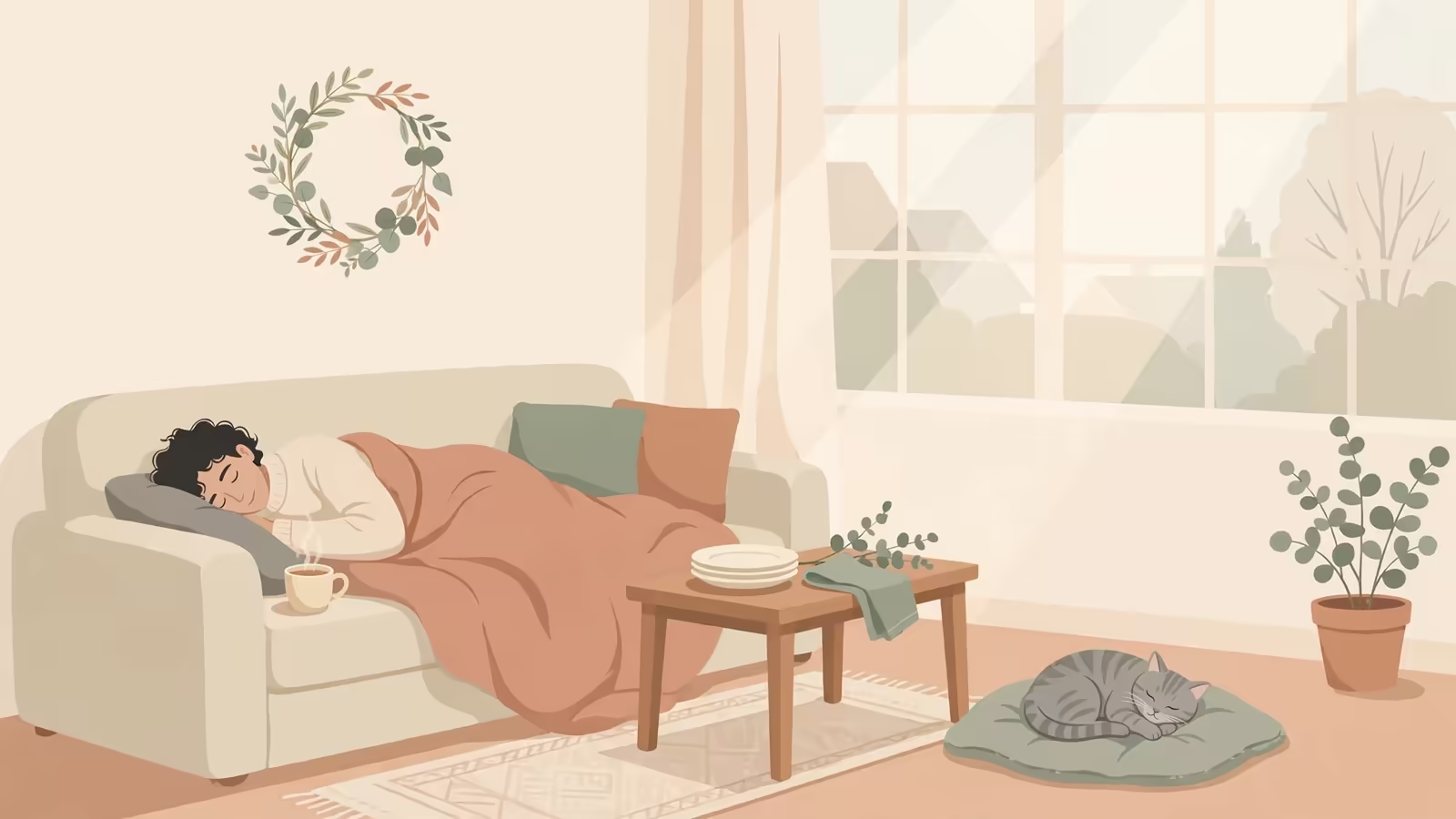
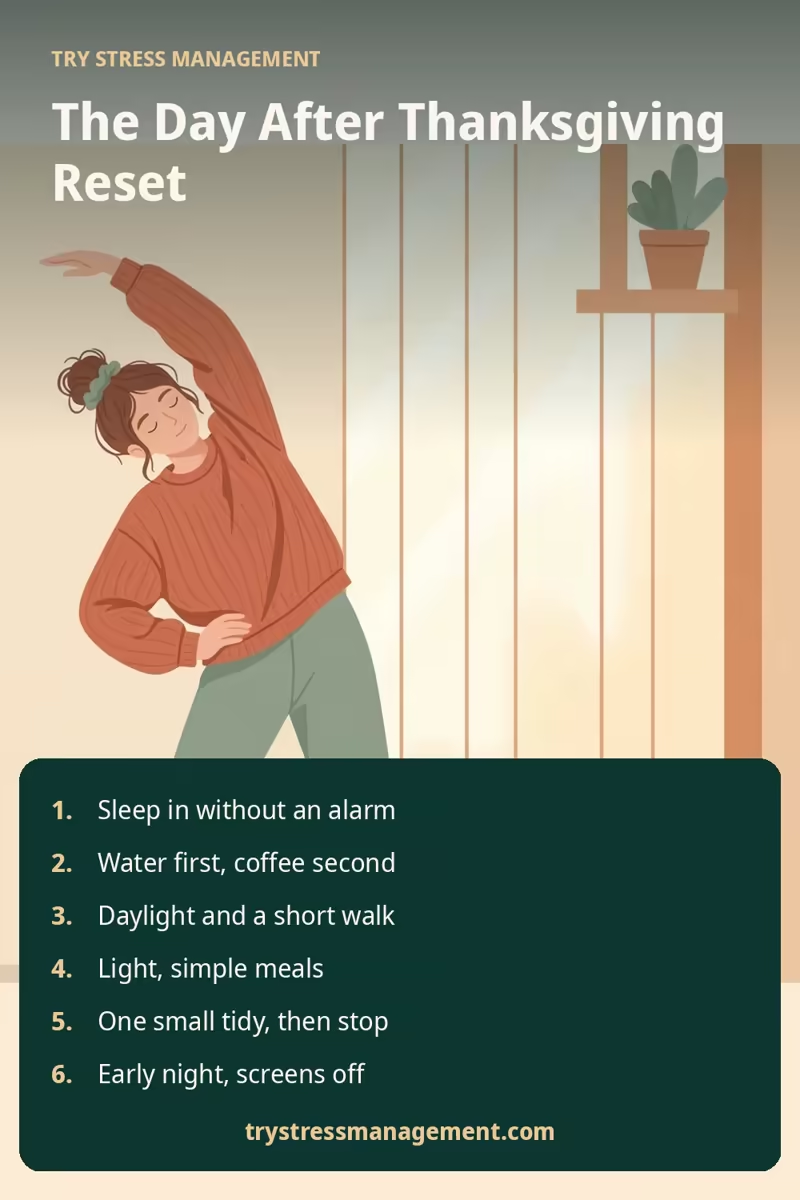
The morning after Thanksgiving asks for very little: sleep in, drink water before coffee, get a few minutes of daylight, eat lightly, tidy one small thing, and go to bed early. That is the whole reset. Recovery from Thanksgiving is mostly a sleep debt, a shifted routine, rich food, and a house that hosted a crowd, and each of those settles with ordinary rest over two or three days. In a survey conducted on November 10, 2026, among 1,000 people, nearly one in five said they need a week or more to recover from Thanksgiving, or never fully feel recovered. If Friday feels heavier than you expected, you are in plenty of company, and a gentle plan still shortens the drag for most people.

Why the day after Thanksgiving feels so heavy
Thanksgiving compresses a week of effort into one day. Many people travel, cook for hours, host family, sleep in an unfamiliar bed or at unfamiliar times, and eat a large, rich meal late in the day. Bedtimes slide later for several nights in a row, and alcohol, extra coffee, and long stretches of sitting often come with the holiday. Each piece is small. Stacked together, they explain the flat, foggy feeling on Friday morning better than any single cause.
There is also a letdown built into the calendar. Weeks of planning point at one meal, and then the meal is over. The house is quiet or full of dishes, guests leave, and ordinary life is waiting on Monday. Feeling wrung out in that gap is a common response to a demanding stretch ending, and it usually lifts as sleep and routine come back. Our guide to Thanksgiving’s awkward questions covered the day itself; this one starts the morning after.
What actually happened at the table
Start by giving the meal its real size. The Thanksgiving feast is one holiday meal, not a verdict on your habits. The big Thanksgiving Day table held roasted turkey, turkey and stuffing, mashed potatoes, green bean casserole, and probably grandma’s pumpkin pie, and most people sat around it for hours, demolished a first plate, went back for seconds, and overate a little. Going overboard once is the design of the day. The actual Thanksgiving meal is a planned indulgence, and enjoying a slice of pie is part of it, not a failure of discipline.
Two myths are worth dropping before they direct your weekend. The first is tryptophan: turkey does contain it, but the post-meal drowsiness people blame on it comes mostly from the size of the Thanksgiving dinner and a short night before the big day, not from one amino acid. The second is that you need to undo the meal. There is nothing to fix. One large dinner rarely changes anything lasting for most people, including weight gain, which responds to patterns over months, not a single evening. If rich food tends to trigger an unsettled stomach, that is your digestive system working through a bigger, richer load than usual, and digestion settles as meals return to normal size.
A realistic schedule for Friday
Keep Friday loose. The times below are anchors, not appointments, and slipping an hour either way changes nothing. The same goes for the weekend following Thanksgiving.
- Wake when you wake. Skip the alarm if your day allows it. One longer sleep helps pay down the week’s short nights, and a slow start costs nothing today.
- Water first, coffee second. A full glass of water before breakfast, then your normal coffee if you drink it. Travel, salty food, and a warm house leave many people mildly dehydrated by Friday.
- Daylight within the first hour or two. Step outside for ten minutes, walk to the mailbox, or take the dog around the block. Morning light helps your body clock find its place again after late nights.
- A light, simple breakfast and lunch. Soup, eggs, toast, yogurt, fruit, or a small plate of whatever the fridge offers. Eat when you are hungry and stop at comfortable. Heavy grazing all day tends to keep the sluggish feeling going.
- One short walk after lunch. Fifteen to thirty minutes at an easy pace. Gentle movement after a day of sitting and eating may help energy and mood for many people, and it asks nothing like a workout.
- One small tidy, then stop. Clear one counter, run one load of dishes, take out the recycling. Twenty minutes is enough. The rest of the cleanup can spread across the weekend.
- A quiet hour in the afternoon. Read, rest briefly if you need to, or sit outside. Keep it short and early in the afternoon so it does not steal from the night.
- An early, screen-light night. Dim the lights an hour before bed, put the phone in another room, and aim for your usual bedtime or earlier. Tonight’s sleep does more for recovery than anything else on this list.
Light plates and short walks while you settle
The days that follow run on Thanksgiving leftovers and small food choices, and that is fine. Build plates around the lighter parts first: leafy greens, vegetables, soup, and the plainer Thanksgiving food, with the rich dishes in smaller portions beside them. Eat to comfortable fullness and stop there; your usual healthy diet reasserts itself on its own over a few ordinary days, and there is no deadline on it. A large meal can leave blood sugar and energy swinging for a day, as glucose rises and dips after a carbohydrate-heavy plate, and steady, smaller meals smooth that out better than skipping food altogether.
Movement helps more than rules here. A brisk walk after a meal can help stimulate digestion and clear the fog, and even a short stroll counts. Get out of the house once a day across the Thanksgiving weekend; daylight plus motion is the fastest honest way to help you feel human again, and it will reduce stress more reliably than a punishing workout. You cannot recover quickly by force, and you do not need to. The goal is to get back on track by Monday, not by Friday night.
Watch the guilt channel, too. It is common to feel guilty about a meal that seems to revolve around food, and overindulging once is not a pattern your body keeps score of. The holiday season runs on tables, but your relationship with food is not decided by one dinner, and neither is your body image. Shift focus to what the day was actually for: joy and connection, with people you may not see again for months. Black Friday sales and New Year’s resolutions will both arrive soon enough; plan ahead for them next week if you want to. This weekend, it’s okay to let the reset be boring. Ordinary days are how a sleep cycle, an appetite, and a routine find their way back, and a few minutes of mindfulness, one slow breath before you check your phone, makes the ordinary days easier to notice.
Catch up on sleep without wrecking your schedule
Sleep is the center of post-holiday recovery, and the goal is to repay the debt without flipping your schedule upside down. Sleeping until noon on Friday feels good and then makes Friday night wide awake, which makes Saturday groggy too. A steadier pattern works better for most people: sleep in modestly, get daylight early, and hold your wake-up time roughly steady across the weekend, letting bedtime come earlier instead.
A short wind-down helps the first night back. Dim lights, a shower, sleep clothes, and tomorrow’s worries written on paper all tell your body the day is ending. Our pillar guide on how to sleep better with anxiety and stress walks through the full routine, including what to do when your mind races at bedtime. If you rest in the afternoon, keep it near twenty minutes and before mid-afternoon.
Days two and three: the gentle ramp back
Saturday and Sunday are for halves. Half the usual errands, half the usual cleaning, and one or two anchors restored: a normal breakfast time, a walk, a regular bedtime. Cook simply or keep portions small, and freeze what is left by Sunday, since cooked leftovers keep three to four days in the fridge under U.S. Department of Agriculture public health guidance.
Use a few minutes on Sunday to look at the week ahead and write down only the first step of each obligation. A short list on paper quiets the background worry that Monday is enormous. Our Sunday reset routine gives that ten-minute planning habit a calm shape if you want one.
The 3-day gentle reset checklist
- Day 1 (Friday). Sleep in, water and daylight early, one short walk, one small tidy, early night.
- Day 2 (Saturday). Steady wake-up time, light meals, a longer easy walk or gentle stretching, one load of laundry or one room reset, regular bedtime.
- Day 3 (Sunday). Normal meals, ten minutes planning the week, bag packed or clothes laid out for Monday, screens off an hour before bed, regular bedtime.
Easing back into work on Monday
Expect the first morning back to feel slower than usual, and plan for it rather than fighting it. Lay out clothes and pack your bag on Sunday night. Start Monday with the easiest useful task on your list, not the hardest, and put the demanding work late in the morning when you are fully awake. A short walk at lunch helps more than a third coffee for most people. If your energy is still low by midweek, look at sleep first: two or three steady nights usually finish what the weekend started.
What to skip this weekend: an intense workout to “make up for” the meal, a strict cleanse or fast, a full-house deep clean, and starting the next holiday’s planning today. None of those speed recovery, and each one spends energy you are trying to get back.
One calm email a week
If the days after a holiday tend to flatten you, join the free email list. One short email a week with one tested idea for calmer days, and no noise. Subscribe here and your first email brings the printable below.
Free printable: Sleep Better Tonight
A 10-minute evening wind-down on one page: dim lights, screens off, tomorrow’s worries onto paper, a gentle stretch, and slow breathing — the same wind-down that ends the reset days above. Join the free email list and the PDF arrives in your inbox. Print it and keep it by the bed.
Frequently asked questions
How long does it take to recover from Thanksgiving?
Most people feel back to normal within two or three days, once sleep and routine return. In a survey conducted on November 10, 2026, among 1,000 people, nearly one in five said they need a week or more to recover from Thanksgiving, or never fully feel recovered, so a slower bounce-back is common too.
Should I nap on Friday?
A short nap of around twenty minutes, early in the afternoon, suits many people. Long or late daytime sleep often makes the night’s sleep harder, which slows the reset down.
What should I eat on Friday?
Light, simple meals work well for most people: soup, eggs, toast, yogurt, fruit, vegetables, or a small plate of leftovers. Eat when hungry, drink water through the day, and let your appetite set the pace rather than grazing from morning to night.
Is it normal to feel low or flat after the holiday?
A flat day or two after a big, planned-for event is common, and rest, daylight, gentle movement, and steady sleep usually lift it. If low mood or exhaustion lasts for weeks or gets in the way of daily life, talk with a qualified healthcare professional.
When should I start exercising again?
Gentle movement, such as walking and stretching, fits from day one. Most people can return to their usual routine after two or three days, when sleep feels normal again. Let energy, not guilt about the meal, set the timing, and don’t overdo the first session back.
This article is general educational information about everyday stress, rest, and routines. It is not medical advice and does not replace guidance from a qualified healthcare professional. If fatigue, low mood, or sleep problems persist or are severe, please consult a healthcare professional about your personal situation.

Hi, I’m Sophia! Welcome to my blog Try Stress Management (trystressmanagement.com), where I share simple, down-to-earth ways to handle stress and bring more calm into everyday life. Think of me as your friendly guide, offering practical tips, reflections, and little reminders that we’re all figuring this out together.
When I’m not blogging, you’ll usually find me with a good book, sipping tea, or exploring new walking trails. I believe small changes can make a big difference—and that a calmer, happier life is possible for everyone.