
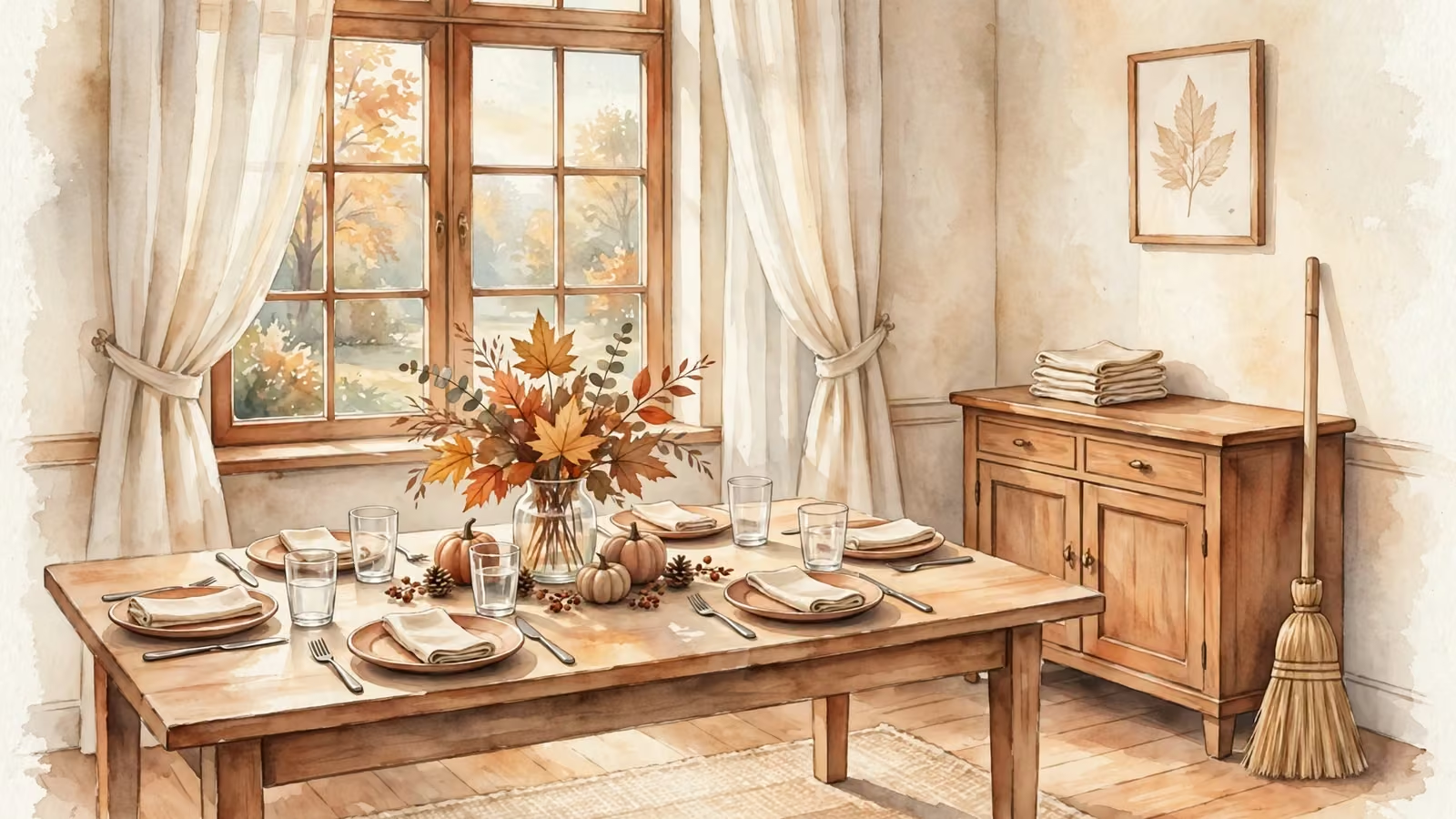
Thanksgiving cleaning does not need a full week, a spotless house, or a host running on fumes by Thursday. It needs three focused days, one room at a time, and a clear line where cleaning stops. Monday takes the kitchen and the entryway. Tuesday takes the bathrooms and the guest spaces. Wednesday takes the dining room, then a short reset. That is the whole plan, and it fits around cooking and work instead of swallowing both. Think of it as a thanksgiving cleaning checklist built for a calm week: three days in advance, a short list of cleaning tasks per day, and nothing on it that exists just to make you tired. The goal is a stress-free thanksgiving, or close to it — a home for guests that feels welcoming without a week of house cleaning first.
Cleaning earns the top spot on the stress list for a reason. In a Zillow survey released November 19, 2026, 48% of Americans put cleaning among the most stressful parts of hosting a holiday meal, ahead of cooking at 33%, having enough room for everyone to sit at 28%, and the cost at 27%. The survey, conducted by The Harris Poll online November 11 to 13, 2026 among 2,006 U.S. adults, also found that two-thirds (66%) of hosts have hidden somewhere from their guests for a few minutes of peace, and 23% hid in a bathroom. The pressure is real, and it is common. A plan that spreads the work across three days takes the edge off it.

Why cleaning tops the stress list
Cooking has a finish line. A dish is done when it comes out of the oven. Cleaning has no such line, so it expands to fill every spare hour before guests arrive. The rooms you see every day look worse to you than they do to anyone else, because you know where every scuff and stain lives. Guests walk in with fresh eyes and a full plate on their mind. They notice the table, the light, and whether there is soap and a dry towel where they wash their hands. They do not inspect the inside of your oven.
Cleaning stress also stacks on top of everything else a host carries: the menu, the timing, the seating, the budget. Our guide to Thanksgiving hosting stress covers that wider load, with a triage table for deciding what to keep, hand off, or skip. This guide stays on the cleaning half of the job, because cleaning is the part hosts can finish early, in small pieces, and then stop thinking about.
One more number from the Zillow survey is worth keeping in mind while you plan. Half of Americans say they love hosting, and 71% dream of a full table. The cleaning is not the point of the day. It is the setup for the part people actually want.
What “clean enough” looks like
Before the plan, decide the standard. “Clean enough” means a guest can use every shared space comfortably and nothing draws the eye for the wrong reason. It does not mean a deep clean. It does not mean a thorough cleaning of every corner, and it does not mean reorganized. Nobody needs to hire a cleaner for this plan, and nobody needs to declutter a single drawer. The test is simple: stand in the doorway of each room for ten seconds and note what you see first. Fix that, then move on. Focus on the common areas and the high-traffic areas, because those are the rooms thanksgiving guests actually live in.
Room by room, the standard looks like this:
Entryway. Clear floor, a place for coats and shoes, a wiped door handle, and a working light. Make sure there’s space for coats before the first guest rings the bell. Guests form their first impression here in about five seconds.
Kitchen. Clear countertops, a clean stovetop, an empty sink or a running dishwasher, a full soap dispenser, and one clean hand towel. The inside of the fridge can wait until after the holiday.
Dining room. A wiped table, set places, clean glasses, and chairs that are dusted where hands rest. A tablecloth covers more sins than a polish ever will.
Bathrooms. A clean toilet and sink, a fresh towel, a full roll of toilet paper plus one spare in sight, an empty bin, and a mirror wiped at face height. This is the room guests judge most and remember best.
Guest spaces. A made bed or a clear couch, an empty surface for a bag, and a clear path down the hall. If you have overnight guests, add a glass of water and a phone charger by the bed.
Anything not on that list is optional. Baseboards, windows, light fixtures and ceiling fans, the range hood, carpet cleaning, and organizing your pantry can all wait for a weekend that is not this one. Fan blades collect dust all year; they can collect it for one more week.
The 3-day cleaning plan
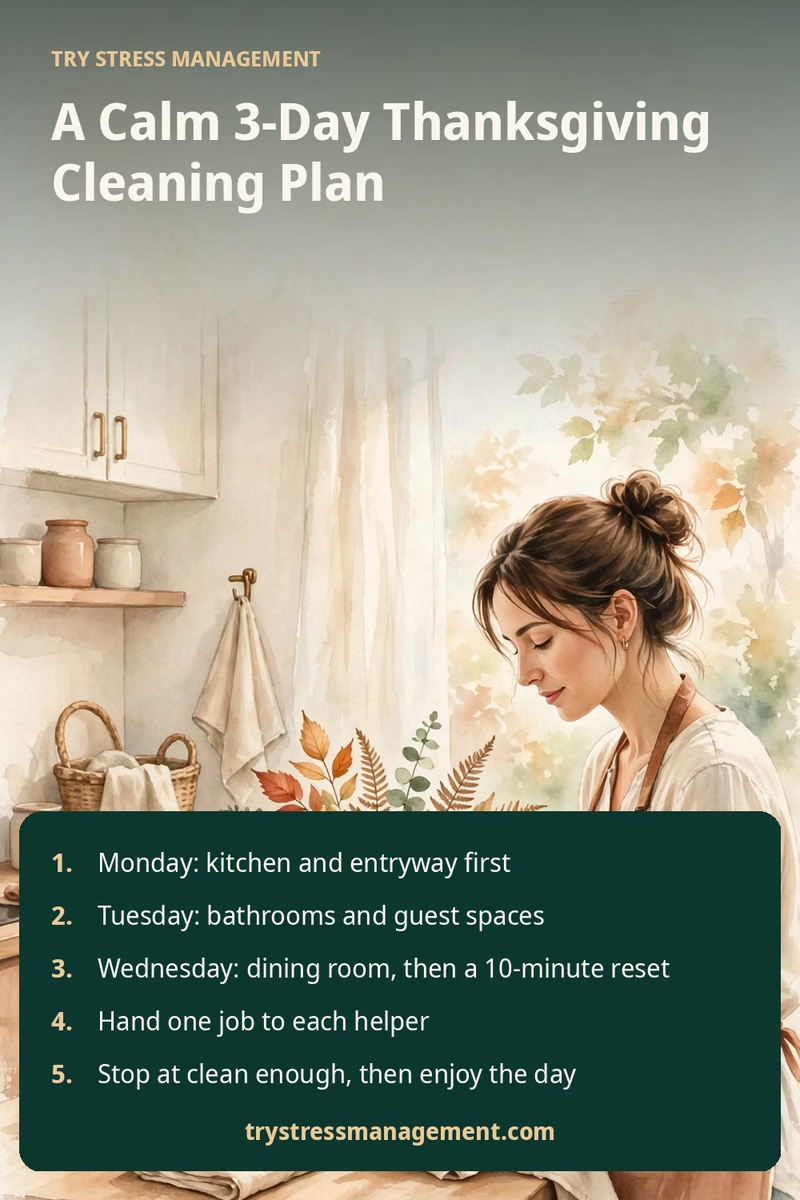
The plan runs Monday to Wednesday, and thanksgiving this year falls on Thursday, November 26, 2026 — so Wednesday is the day before thanksgiving, and it stays light on purpose. Each day has one main room, one small job, and a time cap. The caps matter. When the time is up, stop. A half-finished room with a rested host beats a perfect room with an exhausted one. Small jobs, finished on time, make a big difference to how the week feels.
| Day | Main room | Focus | Time cap |
|---|---|---|---|
| Monday | Kitchen and entryway | Counters, stovetop, floors, coat space | 60 minutes |
| Tuesday | Bathrooms and guest spaces | Toilet, sink, towels, beds, clear surfaces | 45 minutes |
| Wednesday | Dining room | Table, chairs, glasses, centerpiece, reset | 45 minutes |
Monday: kitchen and entryway
Monday is the heavy day, so it goes first, while energy is highest. Monday is the time to tackle the two rooms that carry the week: the kitchen and bathrooms do the heavy lifting on the day itself, and the kitchen starts now. Clear the countertops completely, then wipe them down with soapy water. Clean the stovetop. Load the dishwasher and run it, or wash what is in the sink and leave the rack empty. Empty trash and recycling. Toss expired items from the fridge while you are there. Vacuum and mop the floor last, after everything else is done, so you are not walking over it again.
Then move to the entryway. Clear the floor of shoes, bags, and anything that arrived there during the week. Hang up coats. Wipe the door handle and the light switch. Sweep the porch, and put out a small rug or a tray for wet shoes if the weather calls for it. Check the porch light. Thirty minutes in the kitchen and twenty by the door is a full Monday, and the two rooms guests see first are done.
If the oven needs attention, Monday is the day for it, but keep it light. A wipe of the door and the racks is enough. Nobody opens your oven on the day except the cook, and the self-cleaning cycle on your oven belongs to another week entirely — it locks the oven for hours and fills the house with heat and smell right before you need it.
Tuesday: bathrooms and guest spaces
Tuesday is the guest-comfort day. Start with the guest bathroom, then any second one. Scrub the toilet and sink, wipe the mirror at face height — don’t forget to clean the mirror, it is the one surface every guest studies — empty the bin, and put out a fresh towel. Leave extra toilet paper where a guest can see it. Refill the soap. Skip the bathtub; nobody is taking a bath at your house on Thursday. Simple cleaning solutions are enough here: a spray cleaner, a cloth, and hot water. That is the whole job, and it takes about twenty minutes per room.
Guest spaces come next. Make the guest bed or clear the couch. Empty one surface for bags and coats. Clear the path from the guest room down the hall, including any cords or clutter on the floor. If someone is staying over, set a glass of water and a spare phone charger by the bed. The whole day runs about forty-five minutes, and Tuesday evening is free.
Guest-space checklist
- Guest bed made, or the couch cleared for sleeping
- One empty surface for bags and coats
- A clear path from the guest space to the bathroom
- Fresh hand towel out, toilet roll full, and a spare roll in sight
- A glass of water and a spare phone charger by the bed
Wednesday: dining room and the reset
Wednesday is the lightest day by design, because Wednesday is also cooking day — the thanksgiving menu needs the kitchen more than the cleaning plan does. Wipe the dining table and the chair seats and backs where hands rest. Dust furniture quickly, just the surfaces hands and eyes reach. Set the places, or at least lay out the plates and glasses so setting the table on thanksgiving morning takes five minutes. Polish the glasses if they have spots. Put the centerpiece and the tablecloth in place. Sweep the dining room floor, and vacuum up any dust along the baseboards.
Then run the 10-minute host reset below, once, in the evening. After that, the cleaning is done. Anything you notice after the reset goes on a note for Friday, not on tonight’s list. This is how you prepare your home for guests without spending the last evening on your knees: prepare your home in three short days, then stop.
Asking for help without a negotiation
Most hosts do too much alone because asking feels like admitting the plan failed. It is not. A full table means more hands in the house, and those hands can carry part of the work. The trick is to ask for one named job, not for help in general. “Can someone help clean?” gets silence. “Can you vacuum the living room before three?” gets a yes.
A few lines that work:
For a partner or housemate: “I have the kitchen and the dining room. Can you take the bathrooms and the entryway on Tuesday?”
For an adult child or a relative arriving early: “You are here first, so you get the easy job. Can you set the table and wipe the chairs?”
For a guest who offers to help: “Yes, thank you. The glasses need a quick polish, and the tray is by the sink.” Give them one job with a clear end, then let them sit down.
For a teenager: “Your job is the entryway and the trash. Twenty minutes, then you are done.” A bounded job with a time limit gets done faster than an open-ended one.
If someone says no, let it go. The plan above is sized for one person, so a refusal changes nothing. If someone says yes, thank them once and move on. Do not re-check their work in front of them.
The 10-minute host reset
Run this once on Wednesday evening and once on thanksgiving morning, about an hour before guests arrive. Set a timer for ten minutes. The point is a visible pass over the rooms guests use, not another round of cleaning. Give your home this one pass and then stop.
Minutes 1 to 3: kitchen. Clear the counters, load the dishwasher or stack the sink neatly, wipe down the stove, and put out a clean hand towel.
Minutes 4 to 6: bathroom. Wipe the sink and the faucet grime, swap the towel, check the paper, and empty the bin if it needs it.
Minutes 7 to 8: dining room. Wipe the table, straighten the places, and check the glasses.
Minutes 9 to 10: entryway and living room. Clear the floor, fluff the cushions, straighten the bookshelf, and turn on the lights. Then stop. The timer is the boss. When it rings, change clothes, wash your hands, and sit down for five minutes before anyone arrives.
Where cleaning ends and the day begins
The Zillow survey has one more finding that belongs in this guide. Two-thirds of hosts admit hiding somewhere from their guests for a few minutes of peace, and nearly a quarter hid in a bathroom. Hiding is a sign the day ran the host, not the other way around. A short break is normal. Needing to hide in your own home is a sign to build rest into the day on purpose instead.
Build two pauses into Thursday. The first comes after the reset, before guests arrive: ten minutes sitting down, doing nothing, in clean clothes. The second comes after the meal, while the table is still full: step outside for fresh air, or sit in a quiet room for five minutes. Neither pause needs an excuse. Guests are talking to each other. The food is served. Nothing breaks while you breathe. A deep clean can wait for a quiet weekend in January; thanksgiving day itself is for the table.
When dinner ends, resist the urge to clean everything at once. Load the dishwasher, put the leftovers away, wipe the table, and stop. The rest keeps until Friday. The same survey that named cleaning the top stressor also found that half of Americans love hosting and 71% dream of a full table. The table is the point. The cleaning was only ever the setup. Stay on top of that order — people first, rooms second — and even turkey day cleanup can wait a day.
If the wider season is weighing on you, our guide to managing stress during the holidays covers the rest of it, from family tension to the long stretch between Thanksgiving and New Year. And for the bigger picture, the Mental Health pillar guide to dealing with stress and anxiety lays out the habits that hold up all year.
Free printable: Sleep Better Tonight
A 10-minute evening wind-down on one page: dim lights, screens off, tomorrow’s worries onto paper, a gentle stretch, and slow breathing. Join the free email list and the PDF arrives in your inbox. Print it and keep it by the bed.
Frequently asked questions
How early should I start cleaning for Thanksgiving?
Three days in advance is enough for most homes. This cleaning checklist starts Monday for the kitchen and entryway, Tuesday for bathrooms and guest spaces, Wednesday for the dining room and a short reset. Starting earlier usually means cleaning the same rooms twice. A house cleaning checklist that runs a full week mostly cleans rooms nobody uses.
What should I clean first when hosting Thanksgiving?
The rooms guests use first: the entryway, the kitchen, and the guest bathroom. The dining room comes last, on Wednesday, so it stays clean through Thursday morning. Bedrooms and storage rooms can stay closed. As the day approaches, work from the door inward.
How do I get family to help clean before Thanksgiving?
Ask for one named job with a time limit, not for help in general. “Can you vacuum the living room before three?” works better than “Can someone help clean?” Give each person one job, thank them once, and do not re-check their work. There is no need to spend extra time managing helpers.
What does “clean enough” mean for Thanksgiving?
A guest can use every shared space comfortably and nothing draws the eye for the wrong reason. Clear countertops, a clean toilet and sink, fresh towels, a wiped table, and a clear entryway meet the standard. Baseboards, windows, and the inside of the oven can wait.
How do I stop cleaning and enjoy Thanksgiving?
Set a hard stop: the Wednesday evening reset is the last cleaning of the week, and the Thursday morning reset is ten minutes, timed. After that, change clothes and sit down. After thanksgiving dinner, load the dishwasher, put the leftovers away, wipe the table, and leave the rest for Friday. The big day is for the people at the table.
This guide is general educational information about managing holiday stress. It is not medical advice. If stress feels unmanageable or is affecting your sleep, appetite, or daily life, consider talking with a qualified healthcare professional.

Hi, I’m Sophia! Welcome to my blog Try Stress Management (trystressmanagement.com), where I share simple, down-to-earth ways to handle stress and bring more calm into everyday life. Think of me as your friendly guide, offering practical tips, reflections, and little reminders that we’re all figuring this out together.
When I’m not blogging, you’ll usually find me with a good book, sipping tea, or exploring new walking trails. I believe small changes can make a big difference—and that a calmer, happier life is possible for everyone.