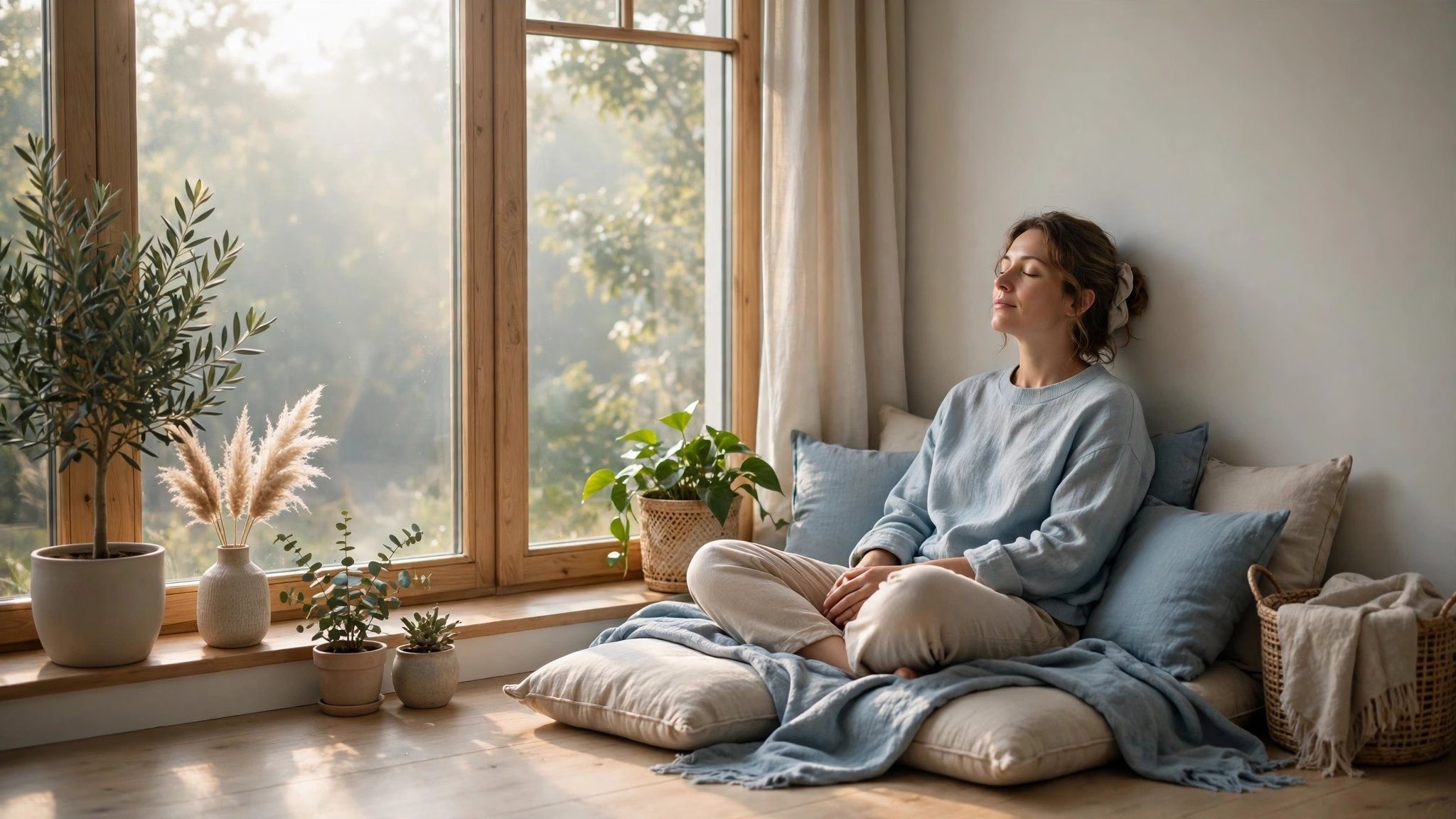
Box breathing is a simple breathing technique you can use anywhere to steady yourself in a stressful moment: breathe in for four seconds, hold for four seconds, breathe out for four seconds, and hold again for four seconds, then repeat. One round takes about 16 seconds, and four rounds take just over a minute. That is the whole technique — no equipment, no app, and no special setting required. Many people find that this slow, even rhythm helps them feel calmer and more focused, and it is easy to practise once or twice a day so it is familiar when you really need it.
What Is Box Breathing?
Box breathing, also called square breathing or four-square breathing, is a paced breathing exercise built around four equal sides, like the four sides of a box. It is a form of breathwork in which you count steadily through each phase: inhale, hold, exhale, hold. The technique is also known as 4-4-4-4 breathing, because each phase lasts four counts.
The practice has become widely known in part because it has been used by United States Navy SEALs to stay steady under pressure, and it is described in the same terms by Cleveland Clinic, which explains the four-count pattern and its calming purpose. You do not need a military background to use box breathing, of course — its appeal is that the counting gives a busy mind something simple and steady to follow.
If you are new to breathwork, box breathing is a friendly starting point. Unlike some breathing techniques that ask you to change your breath in complicated ways, this one asks only that you keep four counts even and gentle. If four seconds feels long at first, you can start with shorter counts and build up gradually, as long as you stay comfortable and never strain.
How Does Box Breathing Work?
When stress rises, breathing often becomes shallow and fast, and the body stays in a state of high alert. Box breathing works, in part, by deliberately slowing that pattern down. Slow breathing gives the nervous system a steadier signal, and many people notice that their shoulders drop, their jaw unclenches, and their thoughts feel less rushed after a few rounds.
At the centre of this is the autonomic nervous system, the part of the nervous system that runs automatic functions such as heart rate and breathing. It has two main branches: the sympathetic branch, associated with alertness and the fight-or-flight response, and the parasympathetic branch, associated with rest and digestion. Some research suggests that slow, controlled breathing may help shift activity toward the parasympathetic side, which is one reason box breathing helps some people feel calmer. The evidence here is promising but not absolute — individual responses vary, and breathing exercises are a coping tool, not a treatment for any condition.
Another benefit of box breathing is focus. Counting to four, four times per round, keeps attention anchored in the present moment. That counting acts a little like a mantra in meditation: it is simple enough to follow, yet absorbing enough to interrupt a spiral of worrying thoughts. For that reason, box breathing is often described as both a breathing technique and a brief mindfulness practice.
How to Practice Box Breathing: A Step-by-Step Guide
Use this step-by-step guide the first few times you practice box breathing, until the rhythm feels natural.
- Get comfortable. Sit upright with your feet on the floor, or stand or lie down if that suits you better. Let your shoulders relax and unclench your jaw. You can close your eyes or keep a soft gaze on one spot.
- Breathe out first. Exhale gently through your mouth, letting the air leave your lungs without forcing it.
- Inhale for four seconds. Breathe in slowly through your nose for a count of four, feeling your belly and then your chest expand. Think of tracing the top side of a box.
- Hold for four seconds. Pause with your lungs comfortably full for a count of four. Keep your shoulders down and avoid tensing up. This is the second side of the box.
- Exhale for four seconds. Breathe out slowly and evenly for a count of four, tracing the third side of the box.
- Hold empty for four seconds. Pause with your lungs comfortably empty for a count of four, completing the box.
- Repeat. Do three to four rounds to start. As the pattern becomes familiar, you can extend a session to five minutes or so.
A note on pace: count at a comfortable speed rather than racing through the numbers. The goal is a smooth, even rhythm, not a test of lung capacity. If you feel dizzy or uncomfortable at any point, stop, breathe normally, and try again later with shorter counts.
The 5-Minute Box Breathing Routine
Once you know the pattern, this timed routine turns box breathing into a complete short practice you can use before a meeting, after a difficult conversation, or as part of a wind-down.
| Minute | What to do |
|---|---|
| Minute 0–1 | Settle in, breathe out, and do three slow box breathing rounds at four seconds per phase. Notice your feet on the floor. |
| Minute 1–2 | Continue for three more rounds. Let each exhale be a little softer than the last. |
| Minute 2–3 | Keep the same rhythm, but shift your attention to your body: relax your shoulders on each exhale. |
| Minute 3–4 | Continue breathing in the box pattern. If your mind wanders, gently return to the count without judging yourself. |
| Minute 4–5 | Finish with two final rounds, then breathe normally for a few breaths and notice how you feel before moving on. |
Five minutes is about 18 rounds at four seconds per phase, so you do not need to count rounds obsessively — the clock does that job for you. Some people like to set a gentle timer so they can close their eyes and simply follow the count.
Box Breathing Benefits
What are the health benefits people look for from a practice like this? The honest answer is that box breathing is best understood as a simple, low-cost coping tool with plausible, modest benefits, not a cure for anything. With that qualification, here are the box breathing benefits most often reported by practitioners and discussed by health sources:
- A calmer stress response. Slowing the breath may help lower stress in the moment for some people. Cleveland Clinic notes that studies show regulating the breath can lower levels of the stress hormone cortisol and may help lower blood pressure, while emphasising that results vary.
- Better focus. The counting task gives attention a single anchor, which may help some people refocus before work that needs concentration.
- A steadier mood in the moment. A few slow rounds can create a small pause between a stressful trigger and your response, which some people find helps them respond more thoughtfully.
- Support for winding down. Because the practice is slow and rhythmic, many people use box breathing as part of an evening routine, alongside other calming habits.
- Portability. You can practice box breathing at your desk, in a car before you go inside (never while driving), in a waiting room, or before bed — anywhere you can breathe comfortably for a minute or two.
These are general wellness observations, not promises. If breathing exercises do not help you, or if stress is persistent and interfering with daily life, that is useful information too, and speaking with a qualified healthcare professional about personal concerns is a sensible next step.
Box Breathing for Stress and Anxiety
Box breathing for stress is the most common reason people learn the technique, and box breathing for anxiety is a close second. The pattern suits stressful moments precisely because it is so structured: when thoughts are racing, you do not have to decide what to do next — you just follow the next side of the box.
A practical way to use box breathing for stress is to pair it with a cue. For example, you might practice box breathing before opening a difficult email, after a tense meeting, or while waiting for a kettle to boil. Linking the practice to an existing moment in your day makes it more likely you will actually use it, rather than remembering it only after the stressful moment has passed.
It is worth being clear about limits. Box breathing may help some people feel calmer in the moment, but it is not a treatment for anxiety disorders or any other health condition, and it does not replace professional support. This article offers general educational information only. If you experience ongoing anxiety, panic, breathing difficulties, or any worrying symptoms, please consult a qualified healthcare professional rather than relying on breathing exercises alone.
Box Breathing vs. Other Breathing Techniques
How does box breathing compare with other well-known breathing exercises? All of them share the same basic idea — slow the breath down on purpose — but they differ in structure:
- Deep breathing exercise (diaphragmatic breathing). This focuses on breathing deeply into the belly rather than on a fixed count. It is a good companion practice, and many people combine belly breathing with the box pattern.
- 4-7-8 breathing. This uses a longer hold and exhale (inhale 4, hold 7, exhale 8). Some people find it more relaxing at bedtime, but the longer counts can feel demanding at first.
- Coherent breathing. This usually means breathing at about five to six breaths per minute without holds. It is less structured than box breathing, which some people prefer and others find harder to follow.
- The square breathing technique in other traditions. Box breathing overlaps with sama vritti pranayama, a yogic equal-ratio breathing practice. Different traditions describe it differently, but the four-equal-phases shape is the same.
If you already enjoy a deep breathing technique, box breathing is an easy addition rather than a replacement: use the box when you want structure and counting, and use free deep breathing when you want something looser.
Common Mistakes to Avoid
- Forcing the breath. Straining to fill or empty your lungs completely defeats the purpose. Keep every phase gentle.
- Counting too fast. Racing through the counts turns a calming practice into another task to rush. Slow, even counts matter more than speed.
- Holding tension. Watch for raised shoulders, a clenched jaw, or a tight stomach during the holds. Soften them on each exhale.
- Practising only in a crisis. Box breathing is easier to use under pressure if you have practised it when calm. A minute or two a day builds familiarity.
- Expecting instant transformation. Some people feel a shift after one round; others notice only a small change. Either response is normal, and results vary from person to person.
When to Use Box Breathing
Good moments to use box breathing include before a presentation, during a break between tasks, after receiving stressful news, while waiting, and as part of a bedtime wind-down. It also pairs well with other calming habits: a short walk, a few stretches, or a quiet cup of tea after your rounds.
One caution: do not practise breath-holding exercises while driving, swimming, or doing anything that needs your full attention, and stop if you feel light-headed. People with respiratory or cardiovascular conditions, or anyone who is pregnant, should check with a qualified healthcare professional before starting a new breathing practice.
Your 7-Day Box Breathing Tracker
Use this simple tracker to build the habit. Tick off each day you practise, and jot down one word for how you felt afterwards — calm, focused, sleepy, restless, or anything else that fits. The point is not a perfect streak; it is noticing what, if anything, changes for you.
| Day | Practised? | When did you practise? | One word afterwards |
|---|---|---|---|
| Day 1 | ☐ | ||
| Day 2 | ☐ | ||
| Day 3 | ☐ | ||
| Day 4 | ☐ | ||
| Day 5 | ☐ | ||
| Day 6 | ☐ | ||
| Day 7 | ☐ |
After seven days, look back at your notes. Did a particular time of day work best? Did three rounds feel better than ten minutes? Let your own experience — not someone else’s routine — shape how you keep using box breathing.
Box Breathing Checklist
Keep this checklist somewhere handy until the pattern is automatic:
- [ ] Sit comfortably, shoulders relaxed, jaw unclenched
- [ ] Breathe out gently to begin
- [ ] Inhale through your nose for four seconds
- [ ] Hold for four seconds, without tensing
- [ ] Exhale slowly for four seconds
- [ ] Hold empty for four seconds
- [ ] Repeat for three to four rounds, or for five minutes
- [ ] Breathe normally afterwards and notice how you feel
More Breathing and Mindfulness Ideas
Box breathing works well as one tool among several. If you would like to explore further, our guide to the best mindfulness exercises to reduce stress puts breathwork alongside body scans, walking meditation, and other practices. For a different angle on breathing and physical tension, see simple breathing methods for tension headaches, and for a looser, everyday approach, deep breathing exercises for calming nerves.
Stay in Touch
If you found this guide helpful and would like more practical, low-pressure ideas for handling everyday stress — including new breathing exercises, calming routines, and mindfulness practices as we publish them — you are warmly invited to join our email list at https://trystressmanagement.com/subscribe/. It is a simple way to keep these tools within reach on the days you need them most.
Frequently Asked Questions
How long should I practice box breathing?
Three to four rounds — just over a minute — is a good starting point, and five minutes makes a complete short session. Practising once or twice a day, even briefly, is more useful than one long session you never repeat.
Is box breathing the same as square breathing?
Yes. Square breathing, four-square breathing, and 4-4-4-4 breathing are all names for the same four-equal-phases pattern: inhale four, hold four, exhale four, hold four.
Can I use box breathing to fall asleep?
Some people find the slow rhythm helpful as part of a wind-down routine, and it may help some people feel sleepier. It is not a sleep treatment, and if sleep problems persist, it is worth discussing them with a qualified healthcare professional.
What if four seconds feels too long?
Shorten the counts to two or three seconds and keep them equal. Comfort matters more than hitting four exactly, and you can build up to four seconds over time.
How quickly does box breathing work?
Some people notice a calmer feeling after a single round, while others need several minutes or notice little change. Responses vary, and the practice is best judged over a week or two of regular use rather than a single attempt.
Where can I learn more about the technique?
Cleveland Clinic’s guide to box breathing benefits and techniques explains the pattern, its background, and its effects in plain language, and is a useful next read.
*This article is general educational wellness information only and is not medical advice. Box breathing is a coping tool, not a treatment for any condition. If you have breathing difficulties, a heart or lung condition, ongoing anxiety, or any health concerns, please consult a qualified healthcare professional about what is right for you.*

Hi, I’m Sophia! Welcome to my blog Try Stress Management (trystressmanagement.com), where I share simple, down-to-earth ways to handle stress and bring more calm into everyday life. Think of me as your friendly guide, offering practical tips, reflections, and little reminders that we’re all figuring this out together.
When I’m not blogging, you’ll usually find me with a good book, sipping tea, or exploring new walking trails. I believe small changes can make a big difference—and that a calmer, happier life is possible for everyone.